

Payments ·
Why Bank Payments Belong at the Point of Sale
What we learned adding real-time bank payments as a tender type, and what it means for interchange.
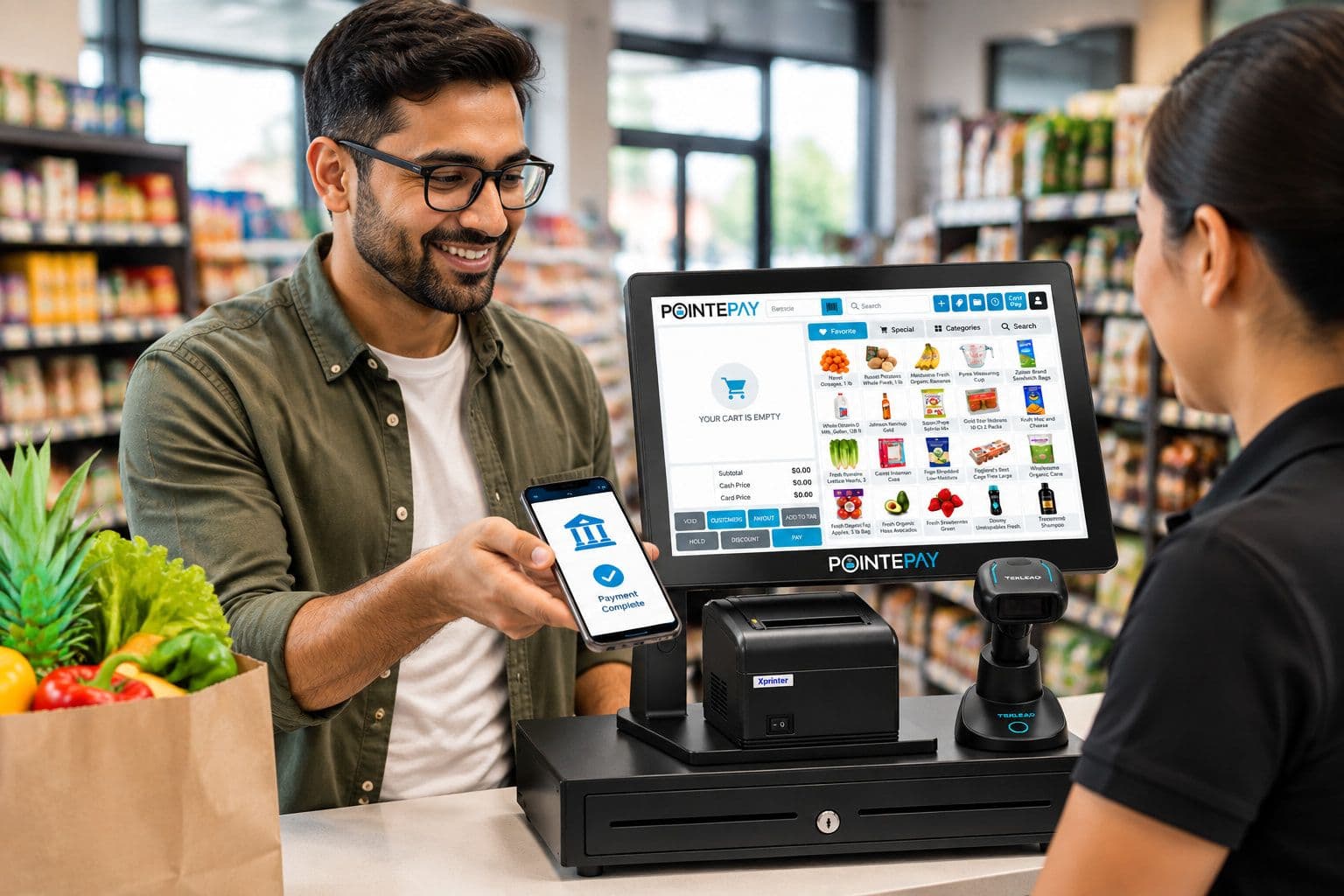
The checkout is becoming more than a card terminal
For decades, merchants have relied heavily on card payments as the default payment method at checkout. Cards created a simple customer experience, but they also introduced complex economics around interchange fees, processing costs, and payment routing.
As payment technology evolves, consumers expect more choices, and merchants are looking for ways to improve payment flexibility without adding operational complexity.
This is where real-time bank payments become important.
Payments are changing at the point of interaction
Historically, bank payments lived outside the physical checkout experience.
Consumers used:
- Online banking portals
- Bank transfers
- Separate payment links
But modern payment infrastructure allows bank payments to become part of the same checkout workflow as:
- Credit cards
- Debit cards
- Mobile wallets
- Gift cards
- Other tender types
The POS becomes the central point where every payment choice comes together.
Adding bank payments as a tender type
When bank payments are integrated directly into the POS, merchants gain:
- More payment flexibility: Customers can choose how they want to pay without changing the checkout process.
- Faster payment confirmation: Real-time payment networks allow merchants to receive confirmation quickly.
- Better payment visibility: Transactions can be managed through the same reporting and operational systems as other payment methods.
Understanding the interchange conversation
Card payments involve several parties:
- Issuing banks
- Card networks
- Acquiring banks
- Payment processors
Interchange is a major component of card payment economics.
Bank payments introduce a different model.
Instead of relying on traditional card network economics, merchants may have additional payment routing options that can influence:
- Processing costs
- Payment acceptance strategies
- Merchant economics
Why the POS is the right place for bank payments
The POS already manages:
- Customer interaction
- Transaction information
- Inventory
- Receipts
- Reporting
- Payment workflows
Adding bank payments directly into the POS creates a unified commerce experience.
Conclusion
The next generation of payments will not be defined by one payment method winning over another.
It will be defined by giving merchants the flexibility to accept the right payment method at the right moment.
Real-time bank payments belong at the point of sale because that is where commerce happens.